Eulogy for USAID
One Year Later

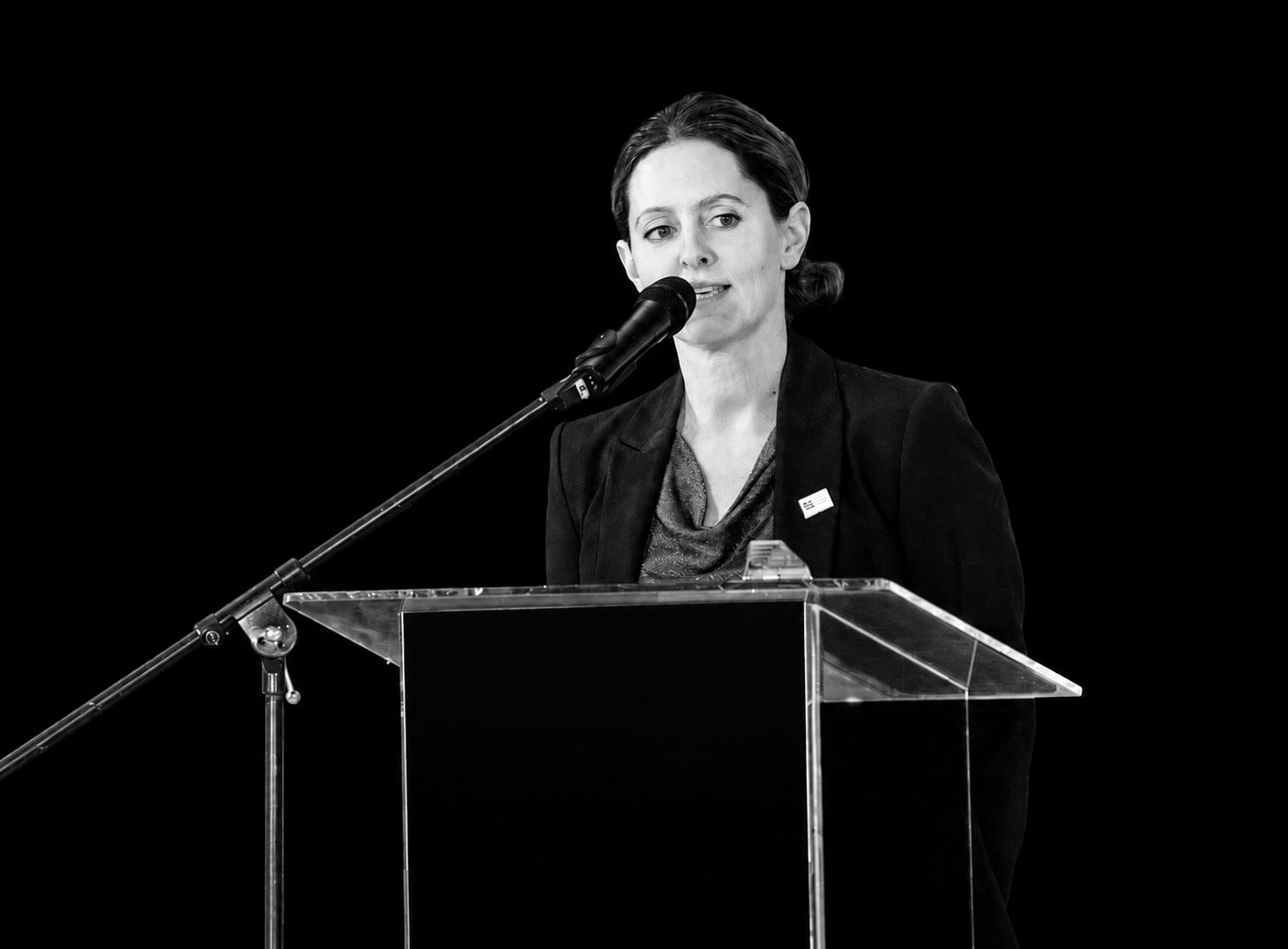
I was asked by the SoftPower/FulStories podcast to deliver a eulogy for USAID on the occasion of the one-year anniversary of its destruction. The idea was to speak of USAID as you would an old friend, a close family member: someone you loved who was no longer with us. I jumped at the chance. When the dismantling of USAID began in 2025, all of us were so shell-shocked it was hard to process the deep feelings of grief that came with it. We were losing not only a career and a beloved vocation, but we also knew in that moment just how many people around the world were going to suffer and start dying almost immediately as a result.
But how do you sum up more than 60 years of foreign assistance? What do you say about the death of the world’s foremost humanitarian agency and America’s most effective tool for soft power and global reputation?
It’s a tall order, but I did my best. You can read the eulogy below or listen to it here.
Thank you for joining me today for the eulogy for the United States Agency for International Development, U-S-A-I-D, or as it was known by its nickname, USAID.
It was one year ago that USAID officially ceased operations and ended its multi-decade year run as the world’s most influential humanitarian agency. It was a death that almost immediately started causing the deaths of many, many others, but we’ll get to that in a minute. Today we are marking the date by looking back and asking the big questions: what was USAID, how did it change the world, and how have we felt its absence in the year that has passed?
Born in 1961, USAID was the brain child of President John F. Kennedy, who looked out at the world and saw that it needed more targeted help to nourish the seeds of democracy sprouting around the globe, to fight the creeping threat of communism, to undermine the authoritarian ambitions of foreign leaders.
So the United States Agency for International Development was born, brought to life through the Foreign Assistance Act in the fall of 1961. Elvis Presley and Ray Charles were at the top of the charts, Sean Connery was about to be the first James Bond, and America was in the middle of its long war with Vietnam.
In its early days, USAID was, not surprisingly, focused on the Cold War. America’s leaders felt it was an important tool in winning that war, one that was fundamentally a war of hearts and minds. It was widely understood at the time that poverty and instability could make countries more susceptible to the seductions of authoritarianism and Soviet influence. Enter USAID.
Its first decades reflected a confidence in agriculture, education, and technology to transform low-income countries into stable democracies that would be allies of the West. Health programming became increasingly more important as the mission evolved, and after the turn of the century HIV epidemic control and anti-terrorism efforts became strong components too.
By 2025, USAID could claim significant credit for the world’s declining rates of extreme poverty and child mortality, and expansion of HIV treatment and vaccinations. Climate resilience and the empowerment of women and girls were by that time core values. During the COVID-19 pandemic, USAID played a crucial role in supply chain, testing, and vaccine logistics. In the first 21 years of the new century alone, USAID programs prevented an estimated 91 million deaths.
The death of USAID itself in 2025 was relatively quick, but not at all painless. First came the diagnosis: denounced as a criminal organization, target of the rantings of a lone wolf on YouTube that managed to get the attention of the administration. By the weekend Donald Trump was claiming the agency was “run by a bunch of radical lunatics” and Elon Musk famously skipped a posh party to feed the agency into the wood chipper. A venerated institution that had been widely supported all the way across the political spectrum suddenly found itself the subject of wild accusations. The press secretary of the United States produced a damning list of projects, riddled with errors, that USAID had supposedly sponsored: 3 of the 4 were in fact State Department initiatives that had nothing to do with USAID.
The death of USAID showed how quickly a few carefully selected lies can spread, how they can take root in a population ripe for misinformation. The truth is most Americans had never heard of USAID before the Trump administration’s crusade against it. And this was by design. No one really thought it made sense to spend money promoting USAID to Americans: the agency had enjoyed widespread bipartisan support for 60 years and did not have any real promotional budget to make sure things stayed that way. The communications efforts that did exist were focused overseas, informing local populations of the generosity of the American people to ensure the United States reaped the soft power benefits of its humanitarian dollars.
The sweeping claims of fraud and abuse leveled by the administration never materialized: the wave of indictments and prosecutions one would expect from a criminal organization failed to appear. The conspiracy theories were baseless: used to shuffle USAID offstage quickly without awakening public resistance. But the damage was done: the narrative provided cover while the website was taken down, records erased, headquarters locked, staff instructed to burn paperwork. By the time lawsuits challenging the illegal and unconstitutional shutdown of USAID made their way through the courts, it was all but over.
But what about the claim of waste? In a time of soaring national debt and our own problems, the question must be asked. USAID cost the American taxpayer $40 billion dollars in 2024. Was it worth it? Should we have spent that money on our own hungry populations, the poor and suffering right here in America?
Some Americans, myself and my Methodist minister father among them, may think that spending a few cents of my taxpayer dollar each day is worth it to save the lives of children, to protect the poor and vulnerable, to relieve the suffering of humans in very real, tangible ways. That this alone, is value enough.
But others may wish to look a bit more inward. To say, American dollars must be spent to benefit Americans. To those folks we say, USAID was one of the best deals in government.
When you mourn for USAID, first mourn for the nations we used to help. For the 75,000 babies born with HIV since the shutdown that otherwise would have been spared, for the 200,000 unnecessary deaths from malaria, for the 34,000 additional women who have died in pregnancy and childbirth without USAID. Mourn for the victims of the earthquake in Myanmar where a USAID team was never sent, or communities hit by floods in Jamaica that didn’t benefit from the agency’s rapid response.
But then mourn for us. USAID was certainly good for the world, but first and foremost, it was good for America. No government in the world does anything out of pure altruism. And ours is no different. We spent 40 billion dollars a year on USAID to make the world better and to make ourselves stronger.
When we paid for two-dollar mosquito nets or .12 cent HIV pills or cheap oral rehydration salts to save children from dying of diarrhea, we were paying for better lives for people without hope of getting those resources in time from anyone else. But, we were also buying soft power, good will, and global influence.
When we wanted the cooperation of other countries, when we wanted strong trading partners, when we wanted to wage war from within the borders of another country, when we wanted diplomatic solutions instead of war, foreign assistance greased those wheels. And all that for less than one percent of our federal budget.
Trump’s own Defense Secretary General James Mattis testified against the president’s first administration attempts to weaken USAID, calling development assistance “an essential, modern tool of U.S national security” and saying “if you don’t fund the State Department fully, then I need to buy more ammunition ultimately.”
And it may be shocking now to listen to Marco Rubio, who helped shutter USAID, give its full-throated defense just a few years earlier. Here he is on the Senate Floor in 2017: “Today foreign aid as part of our overall budget is less than one percent of the total amount the U.S. government spends…This idea that we can somehow just retreat from our engagement in the world is bad for national security, bad for national economy, it isn’t good for policymakers who want to put the American people first, and by the way it doesn’t live up to the standards of who we are as a people.”
Writing in the Washington Post that same year, Republican Senator Lindsey Graham said about proposed budget cuts to foreign assistance: “It’s dead on arrival…it would be a disaster. This budget destroys soft power, it puts our diplomats at risk and it’s going nowhere.” But seven years later USAID wasn’t just diminished, it was destroyed, while the Republicans who knew its worth very well stayed silent while it happened.
If the shutdown was ill-advised from a big picture budget perspective, it was also disastrously implemented in the short term. It is estimated that the sloppy operational shutdown of USAID itself cost six billion dollars, paid for by the American people who got no value in return. High-profile missteps showing flagrant waste of taxpayer dollars over the last year only served to draw attention to the loss of USAID. The administration burning 500 tons of already-purchased emergency food instead of giving it to hungry people. Warehouses full of expired birth control stranded in Belgium. Stocks of high-nutrition packets languishing in American factories instead of being shipped to malnourished children. Then in October, the administration gave the equivalent of half the entire USAID budget to just one country, Argentina, a nation too wealthy to have even qualified for significant USAID assistance in the past but whose leader had personal ties to the administration.
And of course, the destruction of USAID didn’t make the promised dent in the federal deficit. At all. DOGE disbanded after destroying USAID and attacking a few other government departments with relatively small budgets. It never got around to DOGE’ing the Pentagon, which has failed its last eight audits and spent an estimated one billion dollars a day on the war in Iran.
Even if you were resolutely against the very premise of foreign aid, it would be hard to justify its immediate cessation from one day to the next: the abrupt termination of assistance left governments scrambling to fill critical gaps, highly trained staff shut out of their computers, contracts to American organizations left unpaid, and food rotting in ships at port. This was not a peaceful transition: it was a violent and messy death.
USAID wasn’t perfect, of course: every eulogy must make room for the truth of the beloved’s flaws as well. It was a bureaucratic government agency like all the rest, plagued by endless technical debates about the best way to deploy development assistance. I can personally attest to over-engineered procurement systems and certainly rolled my eyes at red tape and institutional sluggishness more than once.
Too much of the funding stayed with big contractors in the Beltway and not enough went directly to local NGOs in the field, although this was something USAID was urgently working to change. In politicized environments with a lot of attention like Pakistan or Sudan, aid projects would sometimes become pressured to yield hasty, newsworthy results that did not fit the timeline of sustainable development. Sometimes funding was lost to fraud or corruption, especially in war zones, but the evidence shows it was a very small percentage of the whole.
Like any government agency, improvements could have been made at USAID, processes streamlined. But on the whole, it must be said, USAID was really good. Even the rigorous procurement systems that annoyed me resulted in clean financial audits and a very strong compliance record.
One key point about USAID that most Americans still don’t know, is that USAID didn’t do anything by itself. Every action, every penny spent required the approval of Congress, who enthusiastically packed each annual budget with its own earmarks, for better or worse. But even more crucially, USAID didn’t move a muscle without the full cooperation and contribution, wherever able, of the recipient countries. Development must be done in lockstep with the local government to be sustainable, which is why USAID toiled hand-in-hand with recipient countries with a vision towards handing over the programs completely.
And they did. When critics ask, where does it end? Are we meant to fund less developed countries forever? The answer is no. That’s why countries like South Korea, Chile, Taiwan, and Poland graduated from USAID assistance years ago to become prosperous donor countries of their own and strong allies of the United States.
For many reasons, USAID’s death last year came as a shock. But unfortunately, the suffering has only begun.
One way to judge something’s worth is to take it away and see what changes. In the case of USAID, that experiment is unfolding now with bleak and devastating results. Public health estimates show 700,000 lives lost so far due to USAID’s shutdown. Last July one of the world’s most reputable medical journals, The Lancet, estimated 14 million additional deaths by 2030 if global aid is not restored to previous levels of effectiveness. This number includes 4 and a half million children under five. In the chaotic news avalanche that has become our daily lives, this unfolding tragedy goes unnoticed by too many Americans.
Will USAID live on in some form? Some are more hopeful than others about the USAID functions that were subsumed by the State Department. State officials themselves have privately stated the Department lacks the personnel, know-how, and experience to take on the job.
Congress voted in January of this year for about 50 billion dollars in funding for foreign assistance and diplomacy. But the independent agency that was USAID is gone. The technical offices are gone. The highly skilled and experienced staff members are gone. Not surprisingly, implementation of the foreign assistance funds so far appears uneven, and much slower now that the delivery system of USAID has been dismantled. More questions than answers remain about the future of foreign assistance in a world without USAID. Increasingly members of Congress, political candidates, and the public are starting to wake up to its loss, are demanding the full return of foreign assistance, are refusing to look away from the possibility of 14 million additional deaths if we get this wrong. And that should encourage us all.
Those who knew USAID knew it was more than a government agency: it felt like a place for hope, for progress, a place where people who had a calling to make life better for others could make a career.
USAID workers vaccinated children they would never see again. They built water systems in countries most people could not find on a map. They helped stop famines before they became headlines. They supported medicine distribution, maternal health clinics, literacy programs, anti-corruption watchdogs, independent journalism, demining operations, disaster response teams, and food pipelines that kept families alive.
And they did it for the most part, quietly. Which is why when the death blow came for USAID, most Americans shrugged. Most Americans had never heard of USAID. But a year on, America’s self-inflicted wound is becoming more clear. In the Ebola outbreak that circulated for weeks before the world was alerted, in two billion dollars in cancelled orders for crops from American farmers, in the loss of at least 30,000 American jobs, and most of all in the destruction of the world’s most effective soft power tool, the one that JFK knew we needed over 60 years ago.
In USAID’s earliest years, the government supported the world’s poorest countries to shore them up against the influence of Soviet power. In 2026, the enemies are different, but the experts still agree that massive influence and power comes when larger economies send aid to smaller ones. The returns are healthy trading partners, strong democratic allies, and populations more resilient against radicalization, food insecurity, epidemics, and natural disasters.
It was the father of USAID, John F. Kennedy, who said: “Those who make peaceful revolution impossible will make violent revolution inevitable.” This belief, that global progress towards democracy and human rights and decent conditions could be done more effectively with peaceful influence and cooperation rather than war and coercion, persisted as a core belief through USAID until the end.
May we someday live that vision again in all of its strength and optimism. For our neighbors on this planet, and for our own power and stability as the United States of America. For the 500 children still dying today and every day due to the destruction of the agency, may we do it quickly. In the meantime, for all it gave, for the good work it did, for the lives it saved and the progress it made, we miss you, USAID.
And straight away, there was Ebola. Keeping the globe safe. Keeps us all safe.